![Recare [logo]](https://www.recare.co.uk/wp-content/themes/recare-theme-2021/assets/img/recare-logo-no-strap.svg)
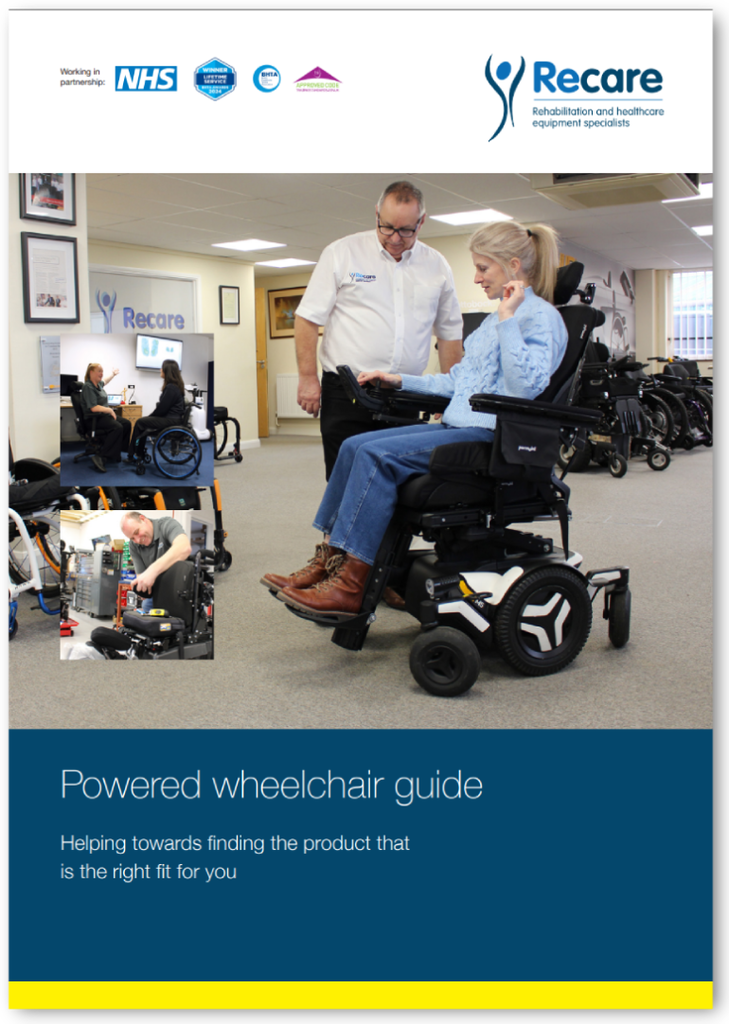
Download our Powered Wheelchair Guide
Choosing the right Powered Wheelchair (Powerchair) can feel overwhelming with so many advanced options available today. Recare's comprehensive Powerchair Guide is designed as an essential introductory resource to help users, carers, therapists, and prescribers understand the key features and configurations before booking a professional assessment.
Topics covered in the guide
The guide explains how modern powerchairs go far beyond basic mobility - they support posture, pressure relief, health benefits (like improved circulation and bone density), and everyday independence in homes, workplaces, shops, and outdoors.
1. Main Drive Configurations Explained
Powerchairs are categorised by their wheel drive system, each suited to different environments and user needs:
- Mid-Wheel-Drive (MWD): Offers excellent balance, tight indoor turning circles, and stability outdoors thanks to six-wheel contact with the ground. Ideal for most users needing manoeuvrability in confined spaces.
- Rear-Wheel-Drive (RWD): Provides smoother, more adjustable turns at lower speeds - useful for those who prefer gradual navigation or have specific control requirements.
- Front-Wheel-Drive (FWD): Excels at climbing kerbs, handling uneven terrain, and compact indoor movement, making it great for users with lower-body limitations or outdoor-focused lifestyles.
2. Essential Powered Seating & Functional Features
- Tilt-in-Space (TIS) and negative tilt for dynamic posture maintenance, pressure redistribution, and easier transfers/exercises.
- Recline systems with anti-shear technology to minimise skin friction and support better circulation during position changes.
- Elevating Leg Rests (ELRs) to promote alignment, reduce swelling, and improve overall comfort.
- Seat lifts for better environmental reach, eye-level interaction, and psychological well-being.
- Standing functions (e.g., sit-to-stand or full standing) deliver significant health advantages, including better bone health, digestion, and social engagement.
- Active reach/posterior tilt for forward-leaning tasks without losing support.
- Memory positions to quickly recall personalised settings throughout the day.
- Specialised controls (head array, switch scanning, etc.) for users with limited hand function.
Recare's Powerchair Guide serves as the perfect starting point to build knowledge and confidence. It covers the fundamentals of drive types, seating functions, and decision-making considerations so you're better prepared for an expert evaluation.
Why Professional Assessment Is Essential
No two users are the same. The guide stresses that features must align with personal factors like posture requirements, daily environments, transfer abilities, and health goals. A thorough assessment by Recare's specialist clinicians and engineers ensures the powerchair is configured precisely, reducing risks like pressure sores or poor positioning while maximising independence and quality of life.
Download the full Powered Wheelchair Guide for free
Download the full Powerchair Guide for free below or contact Recare today to arrange a no-obligation assessment. Our team specialises in tailoring solutions from leading manufacturers to your unique needs.
"*" indicates required fields
How to Choose a Powered Wheelchair – FAQs
To help guide you, we’ve answered some of the most frequently asked questions about selecting a powered wheelchair.